Cardiac arrest does not send a schedule welcome. It occurs in a supermarket aisle, at a youngster's football game, or on your workplace flooring in between meetings. The survival curve drops quick, and by the time professional -responders get here, very early CPR from a spectator usually makes the difference. That is why picking a CPR course is not simply a box to tick for compliance. The best program constructs self-confidence as well as competence, and it aligns with your risks, your office rules, and your resistance for time away from the job.
I have actually taught first aid and CPR for health and wellness solutions, construction companies, schools, and households for greater than a decade. The learners who prosper can be found in with clear objectives and entrust a strategy to maintain abilities fresh. This overview distills that experience into sensible buying criteria, actual compromises, and a couple of hard lessons learned.
Start with your "why"
Before comparing training course catalogs and rates, define what you need out of first aid and cpr training. An early childhood instructor, a health and fitness instructor, and a mine site manager face different truths. When the why is clear, the selection follows.
For lots of, the trigger is compliance. Employers have a duty of care and typically require a first aid certificate fixed to specific criteria. Sporting activity trainers and lifeguards normally need a cpr refresher course annually. Matured care team and nurses need professional-level certification aligned with existing guidelines. Moms and dads and caregivers are less stressed concerning documentation and even more focused on being useful in the initial 2 mins of a crisis.
Your why likewise forms the range. A standalone cpr course focuses on compressions, breaths, and defibrillation. A first aid course includes hemorrhaging control, burns, fractures, allergies, and more. First aid and cpr courses pack these elements so you can deal with one of the most common emergency situations while you wait for the ambulance.
Understand the main course types
Providers often tend to group training in 3 rates. The jargon changes between nations, yet the framework is rather constant. If you strip away the advertising and marketing names, you usually discover the exact same core content under the hood.
Community CPR or Heartsaver style training courses concentrate on adult resuscitation, basic air passage management, and automated exterior defibrillators. They suit workplaces with low to modest threat, school personnel, and the general public. Duration runs 2 to 4 hours if mixed with online concept, or approximately half a day in-person.
Professional rescuer or Basic Life Assistance training courses increase the bar. Expect two-rescuer techniques, bag-valve-mask use, oxygen awareness, and infant and kid modules by default. Medical facilities, dental facilities, and rescue volunteers lean on this rate. Time dedication ranges from 3 to 5 hours for an update to a full day for first-timers, especially when evaluation requirements are strict.

Comprehensive first aid and cpr course bundles include trauma care. You practice wound packing, tourniquets, splinting, anaphylaxis monitoring with auto-injectors, and management of shock. This is the degree most building, manufacturing, hospitality, and education workplaces require. Prepare for a complete day, occasionally with a short online pre-learning module.
A pediatric cpr course is entitled to an unique reference. Infants and kids are not little adults. The respiratory tract is different, compression deepness adjustments, and choking management has its very own steps. If you take care of kids under eight, focus on a pediatric lens or guarantee your picked first aid and cpr training explicitly consists of child and baby content.
Look for acknowledged guidelines and accreditation
Certification just matters if individuals who inspect your qualifications approve it. That usually means positioning with a reliable standard body and a service provider with identified accreditation.
In lots of areas, the gold requirements originate from nationwide resuscitation councils which upgrade formulas every 5 years or earlier if strong new proof emerges. Trustworthy suppliers freshen their cpr courses rapidly after updates. If the trial videos still show obsolete compression-to-ventilation proportions or pre-2015 sequences, maintain walking.
Accreditation goes beyond web content. It covers analysis top quality, trainer credentials, and record-keeping. Medical facilities, regulatory firms, and major employers will usually specify which accreditation footprints they approve. If you are unclear, ask your HR or compliance lead for the precise training codes or training course IDs they acknowledge, after that match those to the carrier's listing. A respectable first aid pro will certainly place the accreditation details in plain view, not behind a get in touch with form.
Skills initially, slides second
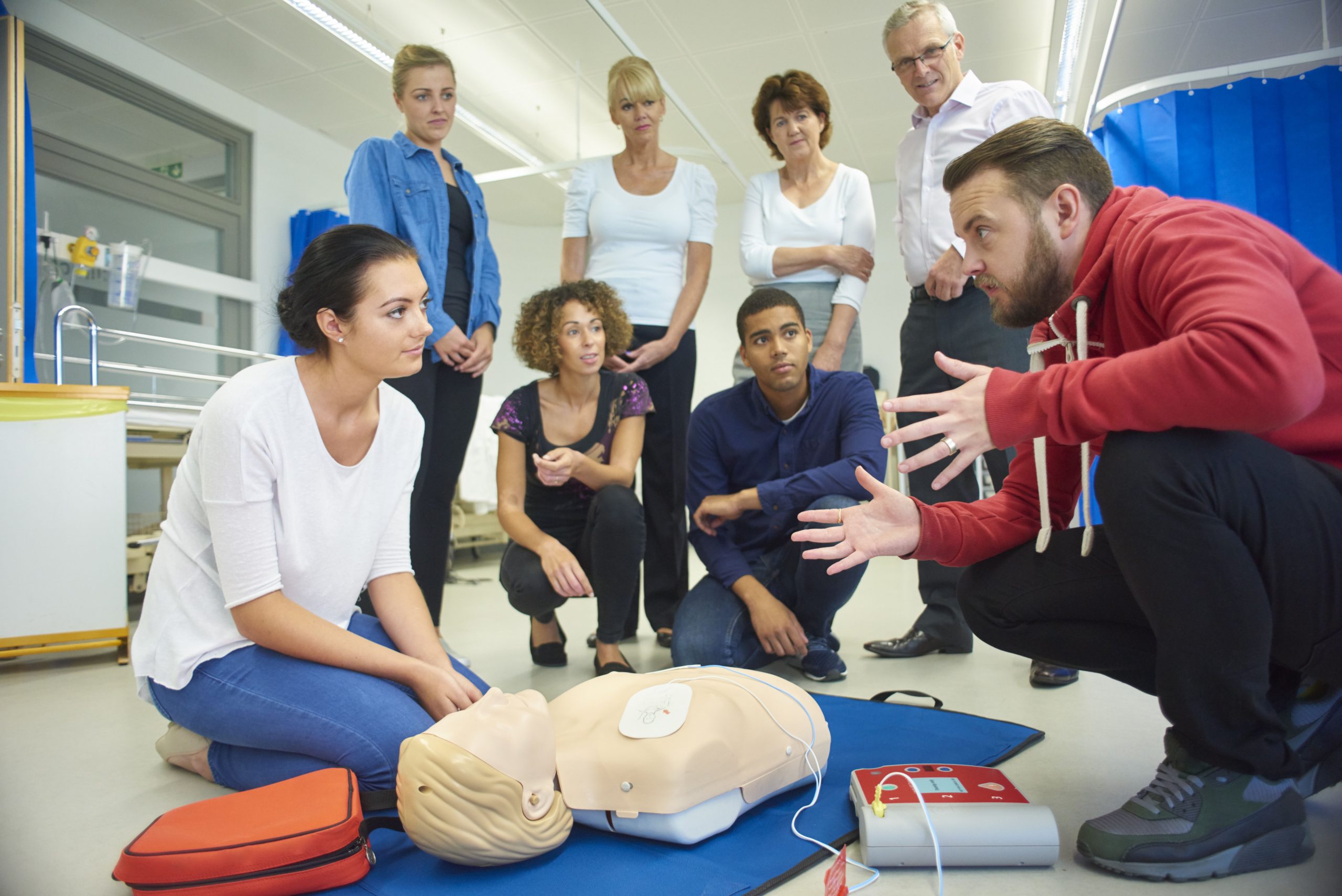
The factor of cpr training is to build muscle memory under stress. That does not take place in a lecture. You require hands-on time with a comments mannequin that informs you whether your compression deepness and rate remain in the wonderful place. Try to find training courses that guarantee adequate method time per student. Generally of thumb, go for at least 10 to 15 minutes of concentrated compressions per person across several cycles, with real-time feedback on depth, recoil, and rate.
Good courses keep instructor-to-learner proportions reduced. When I exceed 10 students per trainer for CPR, the quiet participants hide in the back row and the nervous ones do not request for aid. Smaller sized groups imply you can repair hand position, arm lock, and body auto mechanics so you do not wear out midway via a two-minute cycle.
Quality training likewise simulates context. Activating the AED while you are currently mid-compressions, switching rescuers on the matter, changing from grown-up to youngster settings, and handling a congested scene are skills that stick much better when you practice them, not simply hear about them. If you do not see technique scenarios on the program overview, ask.
What hybrid and online formats can and can not do
Blended understanding has developed. Online components handle concept well. You can absorb the chain of survival, scene security, and recognition of heart attack at your own rate. That time savings matters if your team is juggling rosters. However the hands-on element is non-negotiable for trustworthy certification. Enjoying a video clip will not educate your body just how to push through breast recoil or count out loud while breathing for a child.
When comparing blended options, inspect 2 information. First, how much time is the in-person abilities session, and what is the optimum class dimension. A one-hour check-off for a first aid and cpr course rarely delivers real effectiveness. Second, confirm the credibility of the certification in your sector. Some regulatory authorities accept a crossbreed model for cpr courses but insist on fully in-person assessment for first aid training that covers high-risk subjects like tourniquets or oxygen.
Purely online CPR certifications may be great for personal understanding, however they are frequently turned down by companies and insurance firms. If a provider assures a first aid certificate without in-person requirement, read the small print twice and ask your compliance officer prior to you pay.
AED training is not optional anymore
There was a time when an AED felt like a deluxe. Now they remain in airports, fitness centers, institutions, and also bigger apartment. An AED in the cupboard is not a plan unless individuals understand just how to utilize it under pressure.
Make sure the cpr course you choose includes hands-on AED practice with trainer units. You wish to exercise powering on, complying with motivates, using pads to a bare chest, removing the client before a shock, and returning to compressions immediately. If your website has a specific AED design, ask the supplier to bring a suitable instructor. The core actions are the same, however pad placement layouts and triggers vary sufficient that familiarity helps.
Choosing in between suppliers: what really matters
The best advertising and marketing guarantees discolor quick when the class begins late, the mannequins are broken, and the certificate shows up 6 weeks later. Concentrate on operational dependability. Companies that run hundreds of sessions a year discover to sweat the tiny points that matter in your corner too.
Start by reading recent evaluations that point out specific details, not common appreciation. "Trainer repaired my hand setting and my price boosted from 80 to 110 per minute" is a lot more significant than "fantastic class." Examine the cancellation and rescheduling policy in case your group's shifts change. Ask about language assistance if your staff have varied histories. Verify that your people will really receive a first aid certificate or cpr certificate quickly, preferably within 24 to 72 hours.
Equipment quality is a tell. Responses mannequins with visual indications or electronic readouts drive better performance than older foam blocks. For first aid training, inquire about the products you will utilize. Practicing with actual tourniquets, appropriate epinephrine trainers, and contemporary injury packaging products assists the lessons stick. If the package consists of a couple of plasters and duct tape, you will certainly not obtain modern bleeding control skills.
Finally, take into consideration whether the service provider provides on-site training. Bringing a fitness instructor to your work environment enhances realism and removes traveling friction. I have actually taught CPR in break areas, warehouses, and institution halls. Exercising on the floor where the emergency would actually happen adjustments the energy for the better.
Special instances where program selection actually matters
Not every learner fits the basic pattern. A few situations require cautious option and in some cases a personalized session.
If your group includes individuals with pre-existing back, shoulder, or wrist injuries, select a course that enables flexible techniques and frequent buttons between rescuers. Quality instructors will coach body auto mechanics that reduce stress and suggest functions for those that can not perform compressions, such as AED procedure, timekeeping, and emergency solutions liaison.
For remote and high-risk worksites, a basic cpr course is inadequate. Go for an extensive first aid and cpr course that includes remote feedback planning, hypothermia monitoring, environmental dangers, and prolonged treatment. In these settings, you may be the very first and only aid for an hour or more. That requires a different attitude and more kit.
If you look after infants and young children, ensure choking protocols and baby compressions are exercised continuously. The muscle memory for two fingers on a little breast bone and the rhythm for five back slaps complied with by chest thrusts does not come naturally to adults. A good pediatric component will certainly also attend to high temperature seizures, allergies, and sinking action with a focus on mild respiratory tract management.
In oral and outpatient facilities, seek BLS programs that include group roles, oxygen delivery, and bag-valve-mask ventilation. A collapsing episode in a waiting room might develop into a full apprehension, and your response will be evaluated by expert standards.
How usually to revitalize skills
Skills discolor. Study after study reveals that CPR performance decomposes within months, not years. Many certifications compete two or 3 years for first aid courses and one year for professional-level BLS. If your work environment threat is modest to high, plan a cpr refresher course every 12 months, even if your official certification lasts longer.
Make refresher courses brief and focused. Two hours concentrating on compressions, AED operations, youngster and infant distinctions, and a number of genuine circumstances will do even more for efficiency than rewatching a full theory deck. In between refresher courses, post a fast referral near your AED, run a five-minute drill at a personnel conference, and revolve who recovers the AED during fire drills.
What a reasonable rate looks like
Pricing varies by region, class size, and layout. In many cities, expect a public cpr course to cost the cost of a nice supper. First aid and cpr courses are normally greater because of the longer period and supplies made use of throughout training. On-site group rates frequently drop the per-person cost by 10 to 30 percent, specifically if you can fill up a class. If you see a low price, ask why. Service providers that damage the marketplace commonly run crowded sessions or skimp on tools and teacher pay, which drives down quality.
When budgeting, factor in team time away from job and the worth of faster qualification turn-around. A service provider that provides certificates the exact same day, schedules around your shift adjustment, and brings all equipment on-site will certainly typically conserve you more than the tiny distinction in program fee.
Red flags that suggest you ought to keep looking
Choosing a supplier is part due diligence and component digestive tract feel. Over the years I have found out to ignore particular patterns. Deal with these as warning signs and push for better.
- Vague accreditation claims or missing out on course codes on the website. No in-person skills evaluation offered, yet the provider assures universal acceptance. Overcrowded courses where students share a single mannequin without appropriate hygiene or feedback. Instructors who review slides verbatim and cut situations to "conserve time." Certificates that get here gradually or do not have crucial information such as course degree, day, and special student ID.
What to anticipate on training day
Plan in advance so the time you invest in program day pays off. Put on clothing that let you stoop, lean, and sweat a little. Bring a canteen, and if stooping on difficult floors is tough for you, load a little towel or knee pad. Expect to practice compressions several times, turning roles in a mock emergency. You will likely work in sets or tiny teams and hear a metronome or music track to assist with compression price. In a first aid course, you will certainly also make use of handwear covers, triangular plasters, splints, and in some cases training auto-injectors. Do not be shy. The even more you technique, the extra your mind will comply when adrenaline floods your system throughout the real thing.
A great teacher will certainly remedy you in the minute, not after you finish a two-minute set. They will certainly also produce a tranquil atmosphere. Individuals bother with "breaking ribs." The truth is that correct compressions usually fracture cartilage material. That is not failing. Stopping early is. Your objective is to press set at the proper depth and enable complete recoil so the heart refills in between compressions.
Building a program for teams
For companies, a solitary course is a begin, not a system. Map your procedures and decide the amount of skilled people you require per shift and per area. Aim for overlap so ailment and leave do not leave you subjected. Designate a custodian for each and every AED, consisting of regular monthly checks of pad expiration and battery status. Collaborate with your first aid pro to catch training data, certification expiries, and pointers. It is a lot easier to set up tiny, routine cpr training obstructs than to change a loads ran out certificates at once.
Culture issues too. Normalize fast debriefs after near misses out on. If a person had to call a rescue for a fainting episode, utilize that experience to fine-tune your response flow. First Aid Near Me Mawson Lakes Post the emergency number and your specific location near every phone and in your staff app. The fastest method to sharpen a team is to exercise the very first sixty secs until it is boring.
How to compare shortlists without obtaining lost
It is very easy to drown in similar-sounding options. When you limit to two or three providers, run a basic, side-by-side check that surpasses price.
- Does the course match your risk account and governing needs, with the proper first aid and cpr course codes listed? How much hands-on time and mannequin-to-learner proportion do they dedicate to, and do they utilize feedback-enabled equipment? What is the prepare for AED technique, pediatric content if required, and realistic situations connected to your environment? How swiftly will you receive a first aid certificate or cpr certificate, and in what format? What do current, details testimonials state about teacher top quality, preparation, and post-course support?
If 2 alternatives still look equivalent, phone each provider and ask a concrete question. As an example, "Our site has a ZOLL AED 3. Can you bring a suitable instructor and pads for method?" advanced first aid course The clearness and rate of the answer often tells you which team will certainly appear prepared.
A note on post-event support
Many students do whatever right in training yet ice up the first time an actual arrest happens. That is normal. If you or your personnel wind up executing CPR, prepare for a debrief with a person that recognizes both the professional and human sides. Great providers provide post-event support, from going through what occurred to helping you freshen any actions that felt unsteady. Early, compassionate debriefing minimizes the stress hangover and cements the lessons.
Where a brief, focused refresher shines
Not every session requires to be long. I run 60 to 90 min cpr refresher courses for groups that train frequently. We start with a fast testimonial of acknowledgment indicators, after that leap straight into timed scenarios. We practice 2 rescuer rotations, AED use with substitute pad misplacement, and a kid situation with choking that progresses to unresponsiveness. By the end, everyone has done at least 2 complete cycles and got comments on rate and deepness. These short bursts maintain performance high without exploding the roster.
If your budget or timetable is tight, consider this rhythm. Complete first aid and cpr training every two or three years as required, after that annual CPR refresher courses, and quarterly micro-drills that take 10 minutes. Post the metronome rate you desire, normally around 100 to 120 compressions per min, and make it a team difficulty to hit the target consistently.
Common myths to leave behind
A couple of mistaken beliefs still drift around first aid courses and cpr training. Clearing them currently will aid you review suppliers and technique correctly.
People fear they may harm somebody by beginning CPR if they are unsure. The risk of damage from good confidence compressions on a less competent, non-breathing individual is much lower than the danger of not acting. Top quality training will teach you easy checks to determine when to start.
Mouth-to-mouth breathing frequently causes anxiousness. In adult heart attack of cardiac beginning, compressions-only CPR is effective up until an AED gets here or advanced aid takes control of. That claimed, for kids and drowning instances, including breaths boosts survival. Select a training course that shows both techniques so you can adapt to the circumstance and your comfort level, and learn to utilize obstacle devices.
Another myth is that AEDs are complicated or unsafe to rescuers. Modern AEDs trainer you through the procedure and evaluate rhythm prior to recommending a shock. You can not shock yourself if you comply with the prompts. Experimenting an instructor AED eliminates the anxiety quickly.

Finally, some believe a certification guarantees efficiency. It does not. Efficiency comes from technique, feedback, and timely refresher courses. Deal with the first aid certificate as a milestone, not the finish line.
The base line
If you remove the decision to its basics, you are choosing between courses that look similar theoretically however feel really different in technique. Prioritize Click here for info identified certification, considerable hands-on time with comments devices, practical AED method, and trainers that train as opposed to lecture. Suit the training course extent to your threats, and established a tempo for refresher courses that maintains abilities alive. Whether you are a moms and dad registering for a Saturday early morning cpr course, a safety manager reserving first aid and cpr courses for four websites, or a clinician maintaining BLS, the ideal training needs to leave you calmer, much faster, and a lot more capable when secs matter.
Choose well, after that exercise up until your hands understand what to do prior to your head catches up. That is the purchase that pays off.